
Latest 8 Panoramas
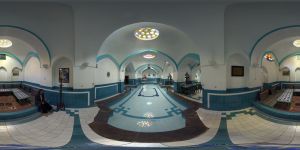
Deep in the heart of the old city, this restored underground hammam is one of the original historic restorations in Yazd and deserves its ongoing popularity. The interior is all tranquil pools, arched ceilings and fine tilework.
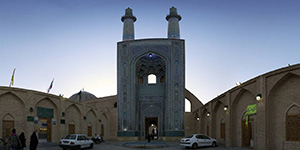
The mosque is a fine specimen of the Azari style of Persian architecture. The mosque is crowned by a pair of minarets, the highest in Iran, and the portal's facade is decorated from top to bottom in dazzling tile work, predominantly blue in colour. Within is a long arcaded courtyard where, behind a deep-set south-east iwan, is a sanctuary chamber (shabestan). This chamber, under a squat tiled dome, is exquisitely decorated with faience mosaic: its tall faience Mihrab, dated 1365, is one of the finest of its kind in existence.
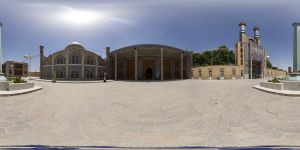
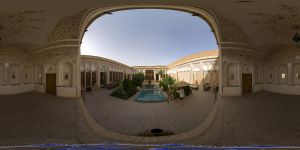
Yazd Water Museum , located in a restored mansion that happens to have a qanat or two underneath. The displays are clear and mostly in English.
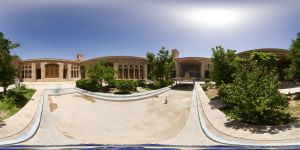
Lariha House, built by Mohammad Ebrahim Lari around 1883. Wooden entrance doors and a hashti (a place people would sitt an wait until permission to enter the house is given) Rooms all around the house for use during different seasons. Souther side has an iwan and wind catcher. A "sardab" cellar with a fountain is there and to access there you need to go 38 steps stairs downwards. Today it is used as a museum and national library and document archive.
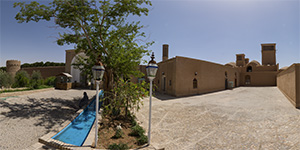
This is the outer courtyard of the Dolatabad mansion/Garden. You enter this courtyard first before you can enter the main courtyard, which the main garden containing the pavilions. Normally in traditional mansions or houses you first enter a hashti and wait for permission to enter, sometimes your business was taken care of already there, after that you could enter the outer courtyard and only very close people could enter the main garden or pavilions.
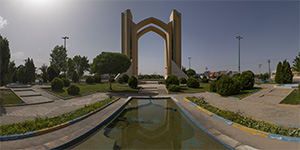
Quran Gate of Yazd at northern edge of the city at the road to Esfahan.
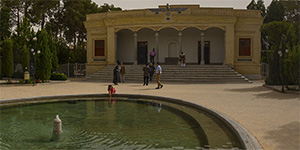
The Zoroastrian Fire Temple in Yazd, established in 1932, holds the highest grade of fire, the Atash Behram, "Fire of victory". It involves the gathering of 16 different "kinds of fire". The fire of this temple has been kept alight continuously since 470 AD. The temple consists of a garden and two buildings with relief decorations similar to the ones seen in Persepolis like Faravahar, cypres trees, etc. See more images from this temple in the blog (http://360stockholm.blogspot.se/2013/06/travel-diary-iran-2013-day-7.html)
|
|
|
|
 View desktop version View desktop version
|