
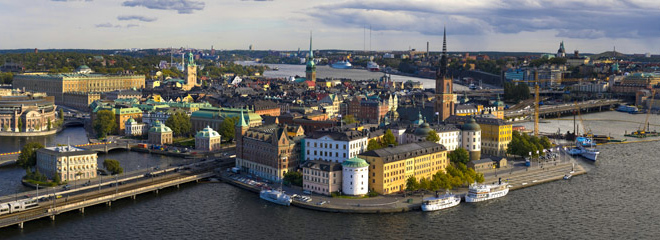
Latest 8 Panoramas
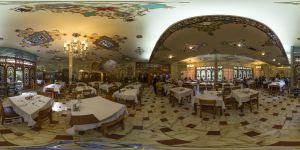
Restaurant Shahrzad, an old and popular restaurant in Esfahan (Isfahan) with classic wall decoration and paintings.
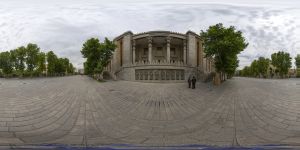
A Persepolis inspired modern building, the Ministry of Foreign Affairs in Tehran. A clear copy of the palaces in Persepolis with double ramped stair ways, portico in the center of the facade, high stone columns with double bullheaded capitals, stone reliefs of Persian guards with spear. A simpler and smaller version of how the Persepolis and Susa Apadana palaces could look like. The ministry is in Bagh-e Melli (Meydan-e Mashgh) in Tehran.
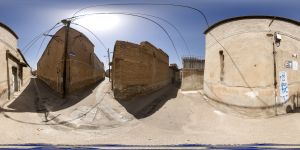
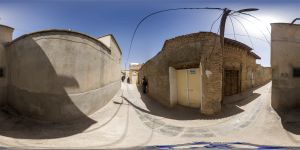
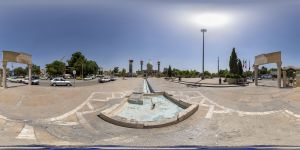
Sayyed Allaeddin Hossein Mosque or more know as Astaneh as common name for both the shrine and the square and the area in general.
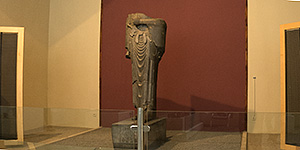
Stone Statue of Darius the Greate - Archeological Museum
Stone Statue built during Darius the Great reign in Egypt, later moved to Persia, found in the Palace of Susa.
On the statue is written in hieroglyphic script:
"A great god is Ahuramazda, who created this earth, who created that sky, who created man, who created happiness for man, and who made Darius king.
This is the statue, made of stone, which Darius ordered to be made in Egypt. This is how everyone who will see this in the future, will know that the Persian man ruled in Egypt.
I am Darius, the great king, king of kings, king of all peoples, king in this great earth far and wide, the son of Hystaspes, an Achaemenid.
King Darius says: May Ahuramazda protect me and what I did! "
On the sides of the stone base there are long lists of all nations/countries that are under the rule of the Persian empire.
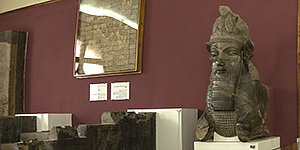
The southern staircase of Tripylon carved out of one piece of stone. A man-bull column capital and a lion column capital in glass. Also a bronze pedestal of three lions, found in the treasury. Further away a upper part of a column from the Apadana Palace and stone dog. The last two items and detail from the stairway can also be seen here, currently in the National Archaeological Museum of Tehran.
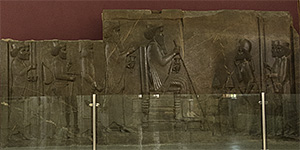
Audience Hall from the time of King Darius I the Great or Xerxes I. The king sitting on his elevated throne (Note that his feet do not touch the earth), the crown prince directly behind him (larger than anybody else only second to the king to show his rank in the empire). Behind him a Zoroastrian high priest, next the king's weapon bearer and at last two royal guards (so called Imortals). In front of the king, two incense burner, the Palace mayor greeting the king in process of requesting permission to begin the audience and two more men, the first bearing a metallic incense burner and the second another guard from the Imortal regiment. This relief was found in the royal treasury of Persepolis, currently in the National Archaeological Museum of Tehran.
|
|
|
|
 View desktop version View desktop version
|